
About the story
Original article
Translated from the original publication. Dates and historical information are retained.
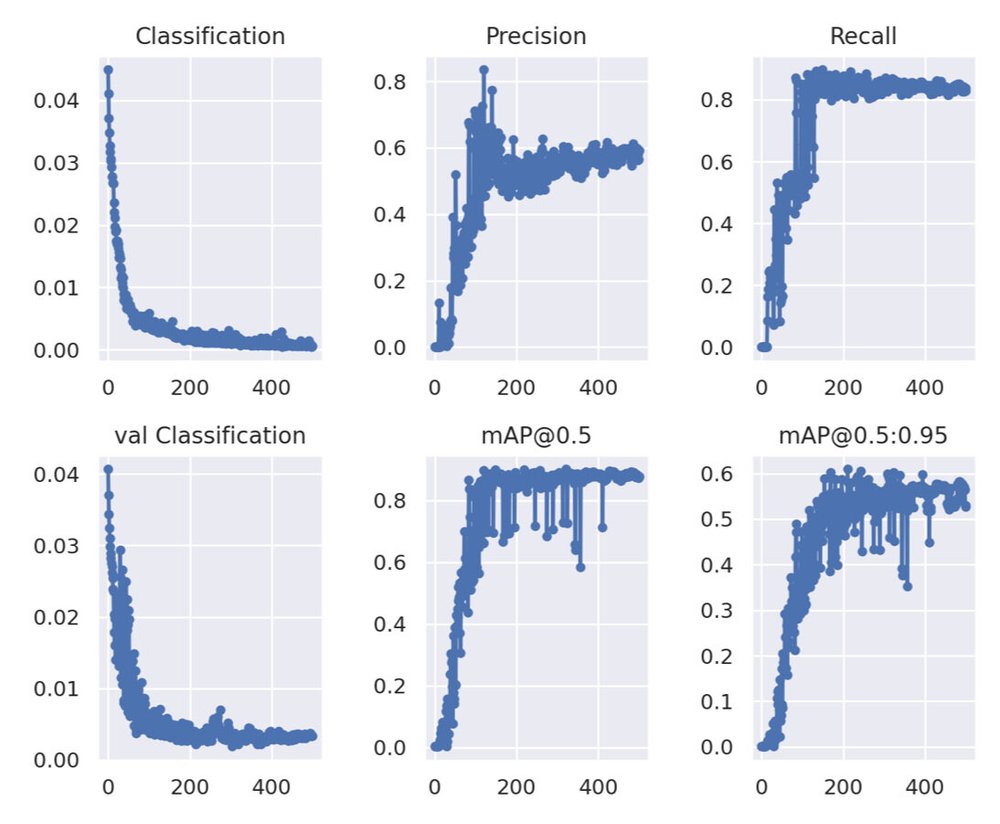
Capia has published a paper in the scientific journal Algorithms on the practical application of object detection. We analysed a unique dataset of images of truck rest areas in Northern Scandinavia, where polar night, cold and snow create particular challenges. We trained a model based on the YOLOv5 algorithm to detect trucks’ front cabins and rear ends, comparing it with an out-of-the-box YOLOv5 model that detects whole trucks. The results show improved truck detection using front and rear features rather than entire vehicles, despite challenging images with many overlaps and cut-offs.
Follow the link to read the complete paper.
Abstract
The proper planning of rest periods in response to the availability of parking spaces at rest areas is an important issue for haulage companies as well as traffic and road administrations. We present a case study of how You Only Look Once (YOLO)v5 can be implemented to detect heavy goods vehicles at rest areas during winter to allow for the real-time prediction of parking spot occupancy. Snowy conditions and the polar night in winter typically pose some challenges for image recognition, hence we use thermal network cameras. As these images typically have a high number of overlaps and cut-offs of vehicles, we applied transfer learning to YOLOv5 to investigate whether the front cabin and the rear are suitable features for heavy goods vehicle recognition. Our results show that the trained algorithm can detect the front cabin of heavy goods vehicles with high confidence, while detecting the rear seems more difficult, especially when located far away from the camera. In conclusion, we firstly show an improvement in detecting heavy goods vehicles using their front and rear instead of the whole vehicle, when winter conditions result in challenging images with a high number of overlaps and cut-offs, and secondly, we show thermal network imaging to be promising in vehicle detection.
Kasper-Eulaers, M.; Hahn, N.; Berger, S.; Sebulonsen, T.; Myrland, Ø.; Kummervold, P.E. Short Communication: Detecting Heavy Goods Vehicles in Rest Areas in Winter Conditions Using YOLOv5. Algorithms 2021, 14, 114. https://doi.org/10.3390/a14040114
Sources and references
Historical context
This story is based on an earlier publication. It describes the work and data at that time and is not an updated market report.